Michelle's Story: "Never In A Million Years Did I See It Coming."

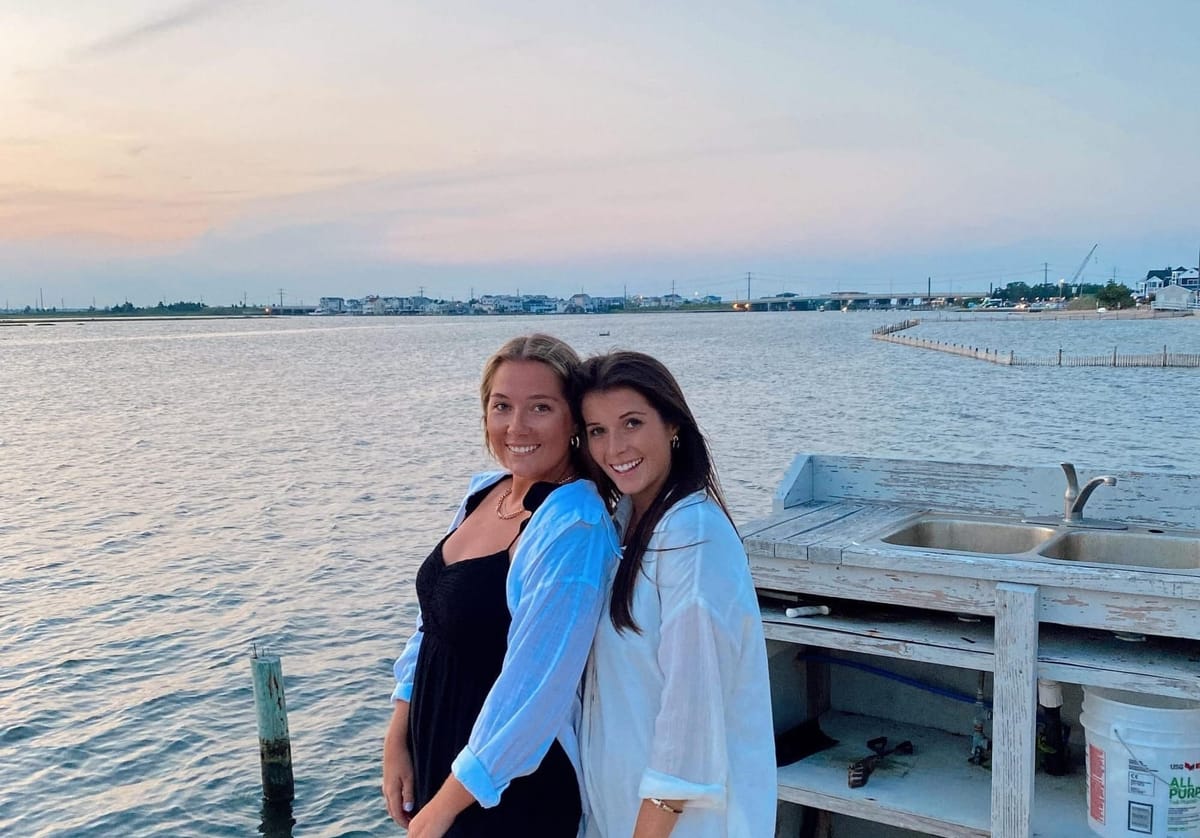
"Never in a million years did I see it coming," Michelle says. “And I don't think in a million years she saw it coming either.”
Before that day, Michelle describes her life as the best it had ever been. Fulfilling and happy, held together by her close family and her sister Amy, the most important person in her world.
They spoke constantly. Amy was warm and magnetic, the kind of person who lit up a room and made others feel at ease.
One morning, Michelle was sitting outside her favorite coffee shop, birds chirping, enjoying her day. She remembers looking up at the sky and thinking how beautiful it was.
Then her phone rang.
Her brother called first, telling her their mom was on the line. When she answered, her mother was crying.
Amy had died.
At first, Michelle searched for explanations. “I remember thinking, 'she must’ve been walking the dog on the street and someone drove by and killed her. Or, she got in a car accident.'”
Then her mom told her what had happened. Amy was shot and killed by her boyfriend of two years.
Michelle had a panic attack. “I've never had one before… I packed up my bag, shaking. I remember getting in my car, and the first thing I did was try to call Amy. After that, I just started screaming.” And then she drove.
Within three hours, she was on a flight home to Baltimore, sobbing on the back of an airplane.
The youngest of four, she and her siblings crowded into their mother’s one-bedroom apartment, air mattresses on the floor, filling every available space.
Unfortunately, there was no time to grieve. Her family was immediately speaking with detectives, packing Amy’s belongings, and sorting through her clothes.
Two days later, the story made headlines. Media outlets began reaching out, but they chose not to speak publicly.
As the legal process began, Michelle and her family were still trying to survive the shock of losing Amy.
“The process through which my family experienced the entire court system was a complete fail. And the justice that was brought to my sister's case was... Nonexistent.”
Even basic communication was nearly impossible. There was no clarity, no guidance, and no comfort. The process dragged on for months. “One could say that I'm just now taking a breath because the legal proceedings didn't get closed until November 2025,” she says.
Months later, the grief started to hit in waves. In the immediate aftermath, her family had plunged into ‘fight-or-flight’ mode, leaving little room to process the trauma. But after six months, Michelle found herself overcome by a deep sadness and a longing to see her sister again. She describes having a physical pain in her heart, which still surfaces.
Michelle tries to look back on her sister's relationship for warning signs. She questions what she might’ve missed, but she still can’t make sense of how a relationship that seemed so normal from the outside could end in such violence. “How do you go from, okay, we’re having an argument, to now we’re not really speaking, to now she’s no longer here?” she asks. “My brain’s still processing that he did this. ’Cause he would go on vacation with us. I would sleep 10 feet away from him in a bunk bed.”
In the beginning, it appeared happy: flowers, regular dates, and family vacations. They argued at times, but Michelle had no reason to believe there was physical violence. “I spoke to her six times a day. There was no indicator of physical abuse.”
When conflict did arise, it often took the form of emotional withdrawal or avoidance. He would shut down or become combative when drinking.
In hindsight, Michelle recognizes that Amy may not have been truly happy in the relationship. She struggled with anxiety and wanted to help fix the people she loved. Michelle saw how her sister’s boyfriend took advantage of those qualities.
“She was completely misled and love-bombed, mistaking what wasn't love for love… It was extreme dopamine rushes that quickly turned to inconsistent withdrawals.”
When she felt ready, Michelle began sharing her sister’s story online. Her focus shifted to helping others recognize early warning signs, particularly emotional abuse. She names patterns like possessiveness, aggression, avoidance, and using a partner as an outlet for anger. She also urges people to pay attention to how someone behaves when alcohol is involved.
“A lot of times, what I hear is, ‘Oh, he was just drunk, it’s fine.’ No, it’s not. How that person is acting when they’re under the influence is their true self coming out,” she says.
Michelle wants survivors to know they have choices. She speaks to how easy it is to dismiss warning signs. “You never think it's going to actually get to that point. Because it's such an abstract thought… And I can wholeheartedly say, my sister didn't know that was going to happen to her.”
In telling Amy’s story, Michelle leads with honoring her life, not just the violence that ended it. And she’s already seeing the impact. “I’ve had multiple people message me saying, ‘I heard your sister's story and I am no longer in the relationship that I was in.’”
Grief remains constant, but Michelle speaks openly about it online to support others experiencing loss. “In the early days,” she explains, “it can look like not even knowing what day it is, but still getting out of bed.” “
Michelle carries her sister with her in everything she does. “When I say my sister is a part of my soul, that is an understatement,” she says. “If there was one person I wouldn’t know how to survive without, It would be her. But here I am.”
Every day, she tries to live the way Amy would have encouraged her. “She was so chill. And she’d say, ‘who cares, Michelle? Post what you want. Do what you want’… She’d tell me to stop overthinking it and just do what makes me happy.”
She sees Amy in her decisions, her path, and her dreams. “She tells me she’s so proud of me, of how I’ve navigated this loss, how I’ve taken so much pain and turned it into purpose… I feel like I’m living for the both of us now.”
Michelle compares grief to standing in an ocean. “Some days it's really rough and you are just trying to keep your head above water… And then there are days where the water is really shallow, and the sun's out, and you feel calm.”
Even then, it’s always there. “You still feel the ripples of waves against your legs… It's just moving with it and not allowing [grief] to completely dictate how you're living your life... It’s not something you get through. It’s something you start to live with.”
~
If you or someone you love is experiencing domestic violence, confidential support is available through the National Domestic Violence Hotline at 1-800-799-SAFE (7233) or thehotline.org.