Jennifer's Story: "My Favorite Word Is Grace."

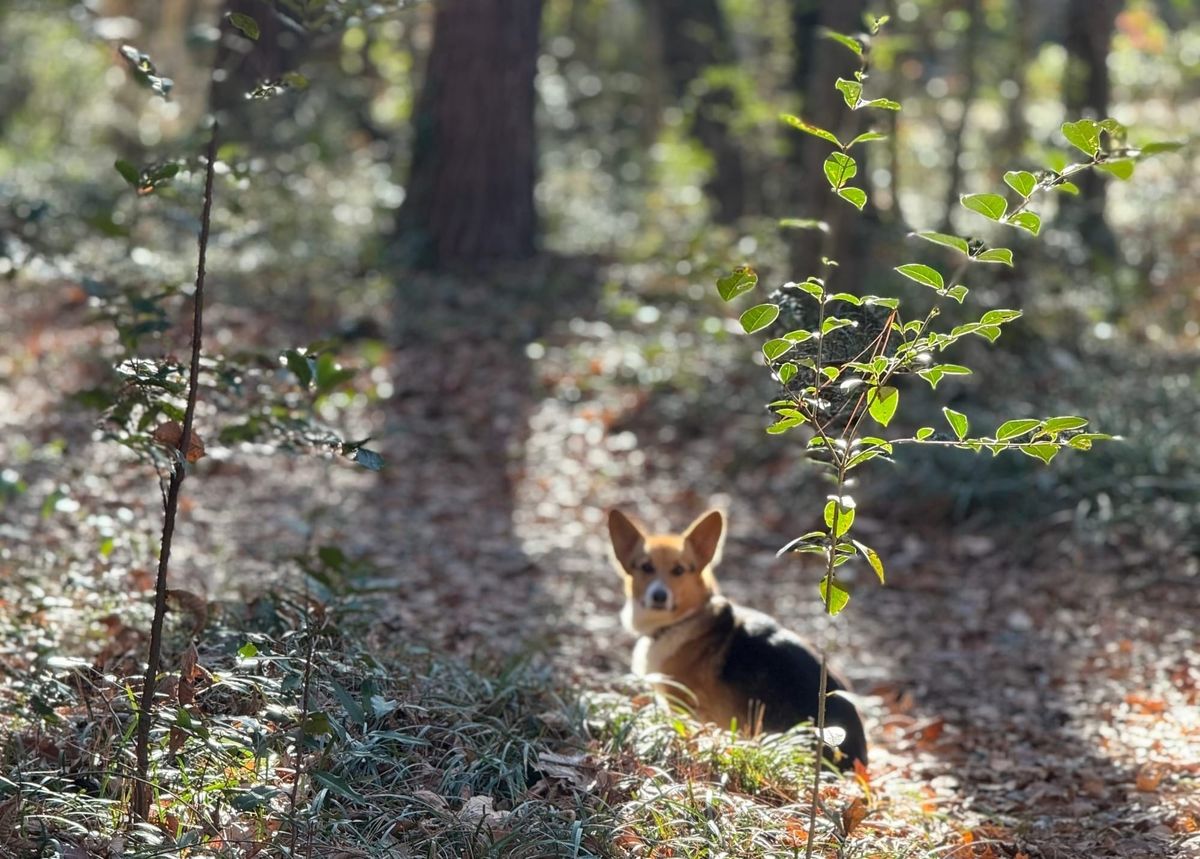
Every morning, Jennifer walks through the woods with her dog, Tulip.
Tucked among the trees by her house, a pair of red-shouldered hawks have built a nest. For months, she has watched the parents teach their babies how to survive. What began as a daily walk eventually became a sanctuary, a place to reconnect with the natural world and find her bearings after an unimaginable loss.
Jennifer grew up in Macon, Georgia, with her mother, father, and younger brother, John.
In 1988, when Jennifer was 22 years old, John was involved in a catastrophic car accident while traveling out west with two friends. For a month, he fought for his life before passing away at 21.
“Watching the ripples of that sudden trauma… instilled in me a lifelong realization. When a young life is abruptly cut short, the trauma fractures an entire ecosystem of family and friends.”
Jennifer turned to alcohol to escape the grief she didn’t know how to process. In her early twenties, she reached a breaking point. She attempted suicide three times within six months of marriage. After the third attempt, she entered treatment.
After treatment, she set out to rebuild her life. Within a few years, she had three children and the family she thought would heal her. “And it did, for a minute.” But grief had changed the way she learned to experience love.
“When a tragedy like that happens, it’s very hard to let people in,” she says. “It’s all about solitude and isolation and fear. Because if you love, you’re gonna get hurt.”
Over time, her marriage began to fall apart. In 2003, while their children were still young, she and her husband separated. “I was mortified by the failure of my marriage, publicly, but mostly within my own family.” Jennifer found herself raising three children while battling addiction and depression.
At her lowest point, she took a bottle of pills and ended up in a coma. “I made the choice to take those pills. I knew what I was doing. Physical pain had opened the gates to my emotional pain,” she said. “When I woke up, I told myself I would never do that again,” she says.
Ten years later, Jennifer went to treatment for the last time. She was away from her children for 9 months. Her oldest had recently gone to treatment, her middle child was preparing for college, and her youngest was in high school.
For several years, Jennifer rebuilt her life. She got involved in AA, traveled, and volunteered in India for six months. But in 2020, her world changed again. Her mother died from pulmonary fibrosis. Three months later, Jennifer lost her youngest daughter, Mary Madison, known lovingly as Mei Mei. She was 20 years old.
While attending Santa Barbara City College during the COVID-19 pandemic, Mei Mei died by suicide. “My daughter’s death shattered our world,” Jennifer says.
The aftermath was unlike anything she had experienced before. For years, she had survived grief. This time, she felt completely undone.
Before Mei Mei’s death, Jennifer’s middle child had suffered the most at the hands of her divorce and alcohol abuse. “About a year after Mei Mei died, [she] stopped talking to me.”
She lost friendships. People avoided saying Mei Mei's name because they didn't know what to say. "I went to people that I thought would support me, and I think it scared them," Jennifer says. In grocery stores, people she had known for years would make eye contact, then turn and walk away. "It's not because they're being ugly," she says. "They don't know what to say."
“People walk around pretending like she never existed… And that's more horrifying for a person than anything.” For Jennifer, silence was more painful than tears.
Two years after Mei Mei passed, Jennifer started piecing her life back together. She spent time in the woods, nannied, and traveled. One of the children she cared for, a three-year-old girl named Sonya, helped Jennifer rediscover how to receive love without fear.
“Children will teach you a lot,” she says. “About being in the moment, and connecting, and loving unconditionally.”
“She saved my life,” Jennifer says. “Just launching herself into my arms for no other reason than her heart… I would read to her, and she would ask me these questions, and the questions helped me navigate my grief.”
Her time in India exposed her to a different way of grieving. She remembers seeing a group of women surround a young widow after her husband died. They sat together on the floor, holding her, singing, crying, and staying with her for weeks until she was ready for them to leave.
That collective embrace was unlike anything she had seen in the U.S. “We are grief illiterate,” Jennifer says. “We don’t know how to treat people.” Jennifer compares it to the silence she faced back home, how friends pulled away and neighbors turned away at grocery stores. In India, grief brought people together; in America, it cost her community.
She believes American culture asks people to move on too quickly, to return to normal before they are ready. In the 1800s, women wore black after experiencing loss. “We think it’s old school, but it was a way to tell the rest of the world, hey, be gentle with me for a minute.”
She immersed herself in the natural world, studying plants, animals, and history until one morning, she realized what she was meant to build. “It brought me to a place where I realized all of our lives are just a blip in the grand scheme of things. We have been here for thousands, millions of years.”
“I woke up one morning, and was like, okay, I know what I'm supposed to do… I am going to have a refuge for people who have suffered traumatic deaths… It just clicked.”
Her vision turned into Grace Mountain Refuge, a wilderness sanctuary where families navigating traumatic loss could find counseling, community, and space to heal.
“It represents the quiet strength found in the ancient, protecting peaks of the wilderness… a comforting, soft landing that families need,” she says. “A place to wander in the woods and contemplate what is most important about being human.”
The name Grace Mountain came from a memory of her mother. “My mother was incredibly private with her grief… I never saw her cry over [John]... but she said to me one time, ‘my favorite word is grace.’”
After Mei Mei’s death, Jennifer looked up the meaning of grace and realized it was exactly what she wanted to offer others.
“When my granddaughter was born, and I held her for the first time, I looked at my son and had tears streaming down my face. And I said, ‘I don't know if I can do this. I don't know if I can have the love that I'm supposed to have for her without being scared.’ Because.. any time you put your heart out there for anybody, it's not that you're chancing a broken heart. You are guaranteed a broken heart in some form. And weighing that out is what isolates a lot of people. But it's worth it.”
Jennifer hopes Grace Mountain will embody the support she never received—the same spirit she found in India, in nature, and in young children. “We cannot change the tragedies that rewrite our lives,” she says. “But we can change how we are held in the aftermath.”
Grace is love without conditions, grace is understanding, grace is being held when life breaks you open.
If you would like to connect with Jennifer or help with her development of Grace Mountain, contact: Gracemountainrefuge@gmail.com